
Open tabs: Johannes Pichler
With the Open tabs series, we introduce you to members of Hive's CoNectar monthly giving community. You'll get a behind-the-scenes window into what they've been paying attention to lately in the world of animal advocacy, and how they're taking action in a way that fits their circumstances.
In this edition, I got to catch up with Johannes Pichler. We traced his path from street activism in Vienna into effective altruism, the story behind helping kickstart Screwworm Free Future, his deep interest in wild animal welfare, how he stays connected to the movement, and why he thinks effective giving is easier to start than most people assume.
What struck me about Johannes is his bias towards action. Again and again in our conversation, the pattern was the same: he notices an opportunity and he takes it, whether that's messaging a stranger, posting a request for collaborators, or helping get an organization off the ground and then stepping back once it can run without him. At Hive we regularly talk about growing one’s “surface area for serendipity,” and Johannes has some great advice and results from doing this. I hope you enjoy our conversation as much as I did!
This interview has been edited for length + clarity.
Megan: I want to start at the beginning, years ago when you first started caring about animals. Was there something in particular, a person, an experience, an organization, a piece of content, that really sparked your compassion? Or was it more of a gradual journey?
Johannes: Yeah, I think it was more gradual, but I can say that it started in 2019 with a documentary, Cowspiracy, that got me more into environmentalism. I started eating less red meat.
A year later was COVID, and I had a lot of time to reflect and watch YouTube videos, including debates with Earthling Ed and Joey Carbstrong. I remember thinking, "these guys win every debate, maybe I should also switch." I watched Dominion, and that was the last notch for me. I went vegan in May 2020.
A few months later, in August, I thought, "these people on YouTube, they do such cool stuff, I want to do this myself." So I reached out to an organization in Vienna, the Association Against Animal Factories. I knew they did street activism, information booths, that kind of thing. Through them I came to Vienna Animal Save, and that's where I started.
Megan: What did that activism look like day-to-day?
Johannes: We did so-called squares, where we'd show people footage from factory farms and slaughterhouses, talk to them, ask what they were feeling. I was also part of one or two vigils in front of a slaughterhouse, where we'd bear witness. I did this for two or three years.
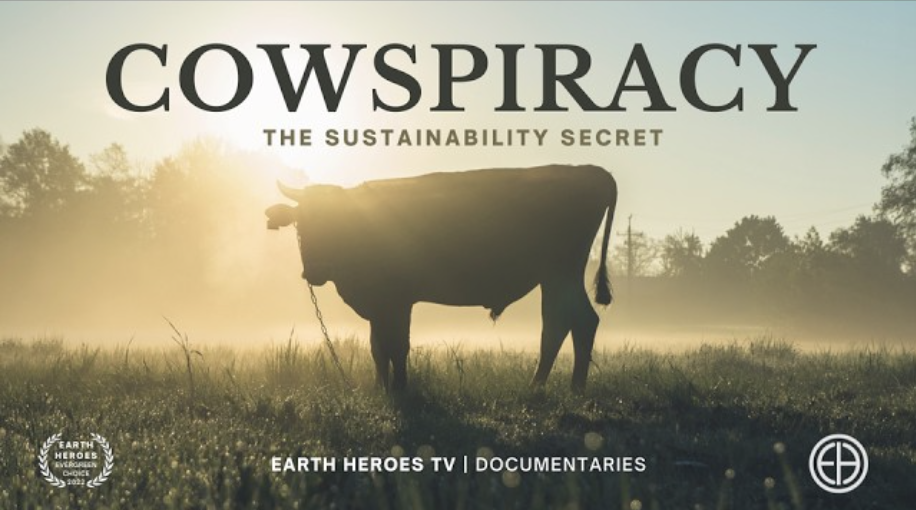
The Cowspiracy documentary that sparked Johannes’ animal advocacy journey
Megan: Kevin* has mentioned a similar start, followed by a move towards the effective altruism space. Did you follow a similar trajectory?
Johannes: Kevin and Therese**, who I got to know through Vienna Animal Save, we all started around the same time. This whole Viennese group started, it was kind of like a new wave of animal rights activism. But after a couple of years we started asking ourselves: is this really the most effective thing we could do?
One after another, everyone got introduced to effective altruism, Kevin first, then me, then Therese. So we started a group called Effective Animal Advocacy Austria, trying to bridge the concepts of EA and animal rights activism, to find the ways we could help animals the most, or the most animals, depending on how you look at it.
Megan: This is a good lead-up to my next question, so let me jump in.
(Editorial note: *Kevin is Hive’s Managing Director and **Therese is Hive’s Generalist, and both are friends of Johannes.)
Megan: I want to take a second to celebrate your resume, because I think it's genuinely impressive. Your street activism, co-founding EAA Austria, helping build the EA Austria community, helping start Screwworm Free Future, your Giving What We Can Pledge, the Wild Animal Initiative birthday fundraiser you did last year, your previous work building the Sentient Futures community, and of course everything you've done in the Hive community since 2023. What made all of this possible, from your perspective? Did you have a plan, or did it snowball?
Johannes: Honestly, it snowballed. I think the surroundings were important, spending a lot of time with like-minded people in Vienna. Back then we were all students, so we'd meet a lot, talk, read, discuss. That environment mattered.
Going to conferences early was some of the best advice I got, from Marcel Steimke in the EA Switzerland community. He told me, "don't wait to go to conferences, go early." So I went, and others went, and we got a lot of ideas, inspiration, and contacts.
Megan: Maybe let’s focus on one of these, specifically Screwworm Free Future. Unfortunately, the screwworm is having a bit of a moment in the U.S.
Johannes: Yeah so for that, I think it first started when I heard Kevin Esvelt discuss screwworms on the 80,000 Hours Podcast. That led me to read an article by Mathias Kirk Bonde about how impactful and cost-effective it might be to use gene drives and policy advocacy to control the screwworm population in Latin America.
I reached out to Mathias at EAG London two years ago. And, it was like, we just had an impromptu 1:1 for maybe 10-20 minutes, the venue was already closed, we walked together while he was heading to DJ the afterparty. He basically said, "just start working on it, and it will soon become a thing."
Honestly, I didn't do that much. "Co-founding" is too big a word, I'd say I helped kickstart it. I read up on the screwworm, posted in the request-for-help channel in Hive Slack asking if anyone wanted to collaborate.
Guess what, one person answered. That was Diego Exposito, who now works at Screwworm Free Future. We wrote a strategy in a Google Doc, talked to experts, and got more volunteers. By the end of the year we had over five great volunteers doing reports, research, the website, fundraising, hiring.
And then I saw, they don't even need me anymore. They're such a great team. So I could happily step back. That was early 2025. They hired Maxi, then Gabriella, then Diego joined, now they're hiring a fourth person. In such a short time it became a real organization, from basically a conversation to a real thing.
Megan: What a cool story about having the discernment to know when to step back, and building a team strong enough that you could.
Johannes: One thing led to another and it became self-driving. And the cool thing is they don't need funding from the animal advocacy movement, because it's such a different intervention. They can get support from people who wouldn't otherwise have donated to animals, maybe even from the US government, since there are screwworm cases in Texas again.
There are critics, some say we shouldn't eradicate a species, not because the consequences would be worse but because the act itself is wrong. I tried to find the best counterarguments myself, back when I was deciding whether to try and start something. But I was really happy to hear a Wild Animal Initiative researcher name screwworm control as one of the most promising direct interventions. And the sterile insect technique is reversible, which matters.
Megan: One day we can have a sidebar about reversible sterile insect technique.
Megan: You've worked across a real range of things, and the beings you care about run from farmed animals to wild animals to invertebrates. With that much on the table, how do you decide where to focus?
Johannes: I'm very uncertain, in general, about what to do next.
Actually, I just got back from the Wild Animal Welfare Summit in New York City, because I think wild animal welfare is especially neglected and huge in scale, and there seem to be tractable ways to help lots of wild animals in the near term.
But I never forget that AI is everywhere and coming even more, transformative AI might change everything. So I've been asking: how can we use AI to work on wild animal welfare? I landed on modeling and forecasting ecosystems. There's an ecological forecasting community, but I don't believe they yet include welfare in their forecasts. That could be something to push for, to introduce them to wild animal welfare.
Megan: I won’t pretend to know anything about that, but it sounds like it's about adding a different facet to existing communities and workflows, rather than starting new research from scratch.
Johannes: Yes, it's a bridging move again, connecting welfare biology with ecological forecasters. That's something I'm excited about.
Megan: Okay, moving on to something more granular. What does staying connected to the animal and EA movements actually look like for you, week to week? What do you read, what spaces are you in?
Johannes: I love this question. Let's start with the Hive Slack, because it's the focal point. I'm a big fan of the Donuts channel. (Editorial note: This is a channel in our Hive Slack community where you get matched with another member every 3 weeks for a quick chat.)
Kevin told me, after I’d been doing Donuts for two years, that you get matched with people you don't have a lot in common with, different channels, different continents, different work. In hindsight it makes so much sense, all the people I've met over the last few years through Donuts were working on completely different things. It's a great way to stay connected.
Megan: I work here at Hive and I did not know that aspect of Donuts!
Johannes: Other than that, I try to have conversations and go to conferences, one-on-ones there, but also following up afterwards.
Here in Vienna, I try to go to in-person events in Vienna whenever I can. This Friday we have our tenth vegan charity dinner. And I'm lucky that a lot of my friends work in the farmed animal movement.
For reading: I follow the EA Forum, I try to read the animal-welfare-tagged posts that look interesting, and honestly the comment sections are often even more valuable. I'm signed up to a few newsletters, Hive Highlights being one, the Wild Animal Initiative newsletter, and a couple of Substacks. Substack has become really popular recently.
Megan: I love that it's such a holistic answer, online and in-person. That in-person thread runs through a lot of what you do.
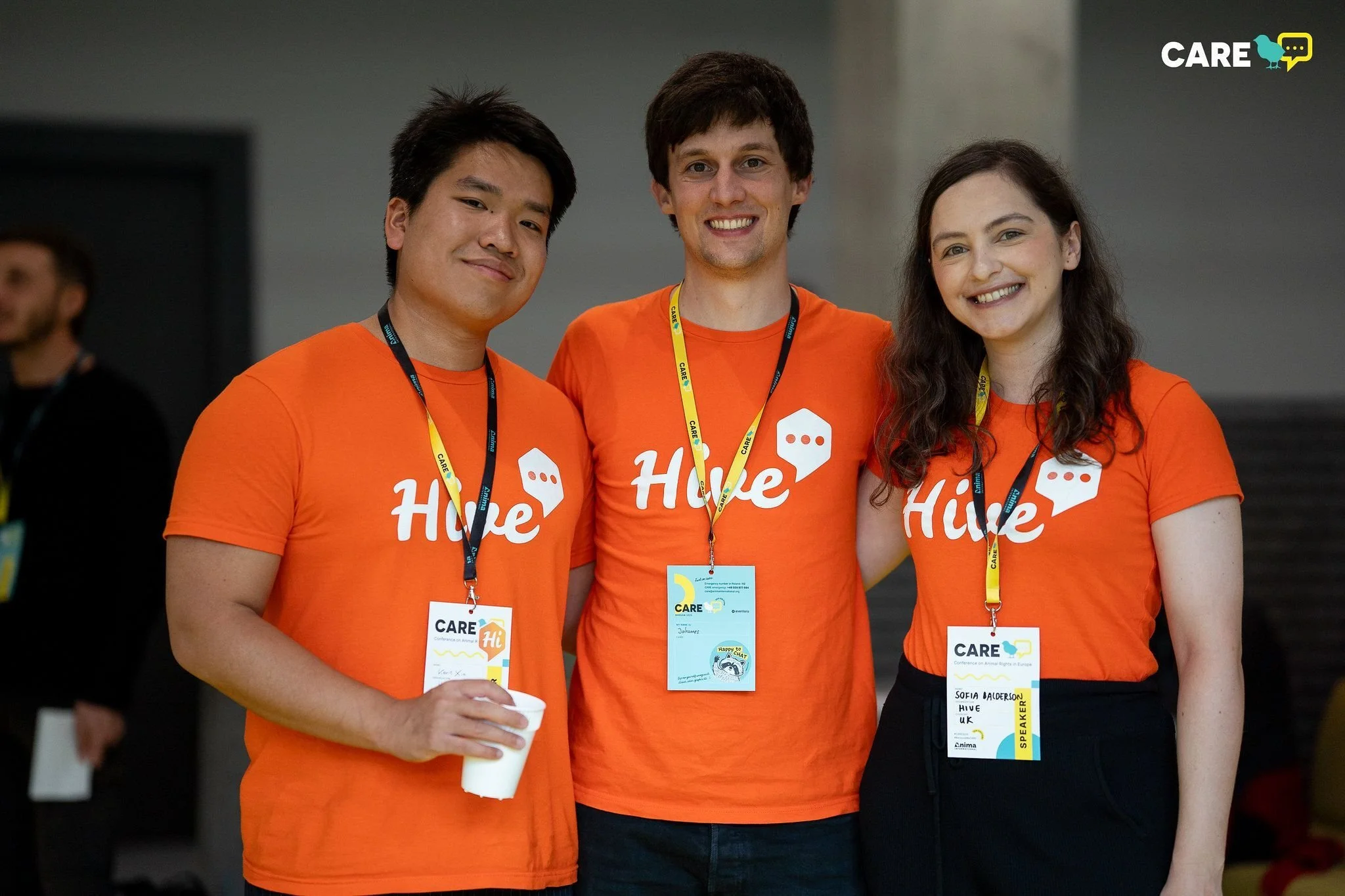
Johannes supporting Hive as a volunteer at the CARE Conference in 2024, pictured with Kevin and Sofia from our team
Megan: You've said before that a lot of people don't realize there are over 5,000 people in Hive Slack, or how much value there is to get out of it. If you could give one piece of advice to someone finding their feet in there, what would it be?
Johannes: The main thing is: just reach out. Many people don't realize you can simply message someone, with a very low bar, and ask for a one-on-one, for career advice, for anything. The worst case is they don't respond. The best case is you have a great conversation, you learn about their work, their experience, maybe your own fit for a role. So one of the first things I tell people is: introduce yourself, and increase your surface area for serendipity.
There's a dynamic I've noticed too. In smaller spaces, people share their ideas and questions really freely. But in a Slack this big, people worry, "if I ask something that's already been asked, or that sounds obvious, everyone will think I'm not smart." I'd just say: write it anyway. That fear stops a lot of good questions from ever getting asked.
Megan: That's a lovely mix of soft skills, proactivity and vulnerability. Are there practical things that help too?
Johannes: Yes! The downside of a big, active Slack is that it's overwhelming at the start, so I tell people not to join too many channels. Leave the ones that aren't relevant right now, keep the defaults if you like, and then pick five or ten others to really focus on.
Beyond that, learn the search function, you can filter very narrowly, by keyword, by channel, by who sent something, and the whole history is saved from the very beginning, which is amazing. You can group channels into sections to stay organized. And I'm a big fan of keyboard shortcuts for jumping around. Little things, but they make the whole experience nicer. Really, it's just fun.
Megan: You strike me as someone who, when you see an opportunity, takes action. Big actions, small actions, all sorts. It's very cool, and honestly not as common as you'd think.
Megan: Next let’s talk about giving. When you're at those Vienna charity dinners, how do you talk about the power of giving, even €10 or €20, effectively for animals?
Johannes: The cool thing is that it's actually not a big thing to talk about there. It's not like everyone's debating it. They've just normalized giving effectively to animals, without a huge discussion. Everyone gives €20 or more, whatever they're comfortable with, and it gets donated to an ACE-recommended charity. It's a lovely social event, and it introduces people to effective giving while building community at the same time.
When I volunteer at a Giving What We Can booth at conferences, I find people have a lot of misconceptions. They think, "if I'm a student, I can't afford 10%." But you don't have to. Even if you take the 10% pledge as a student, you can still give 1%, that's within the spirit of it.
What worked for me was a conversation with someone at Giving What We Can who said there's no perfect time to pledge. If you're a student, you have no money. First job, you want to save. Buying a house, no money. Kids, you want to invest in them. So you might as well do it now, otherwise you'll always find an excuse. That really helped me realize I wanted to do it. And once I saw how many animals a small donation can help, one estimate is that $1 can help somewhere between 10 and 100 chickens out of cages, it drove it home.
Megan: That figure is genuinely hard to get your head around.
Johannes: We're now a bit past 10,000 people who've taken the 10% pledge. That's still very early, so if you’re reading this and decide to pledge, you'd be one of the first people to do this. It's similar to veganism or other social norms, you're normalizing it, and that makes it possible for others to take the step too.
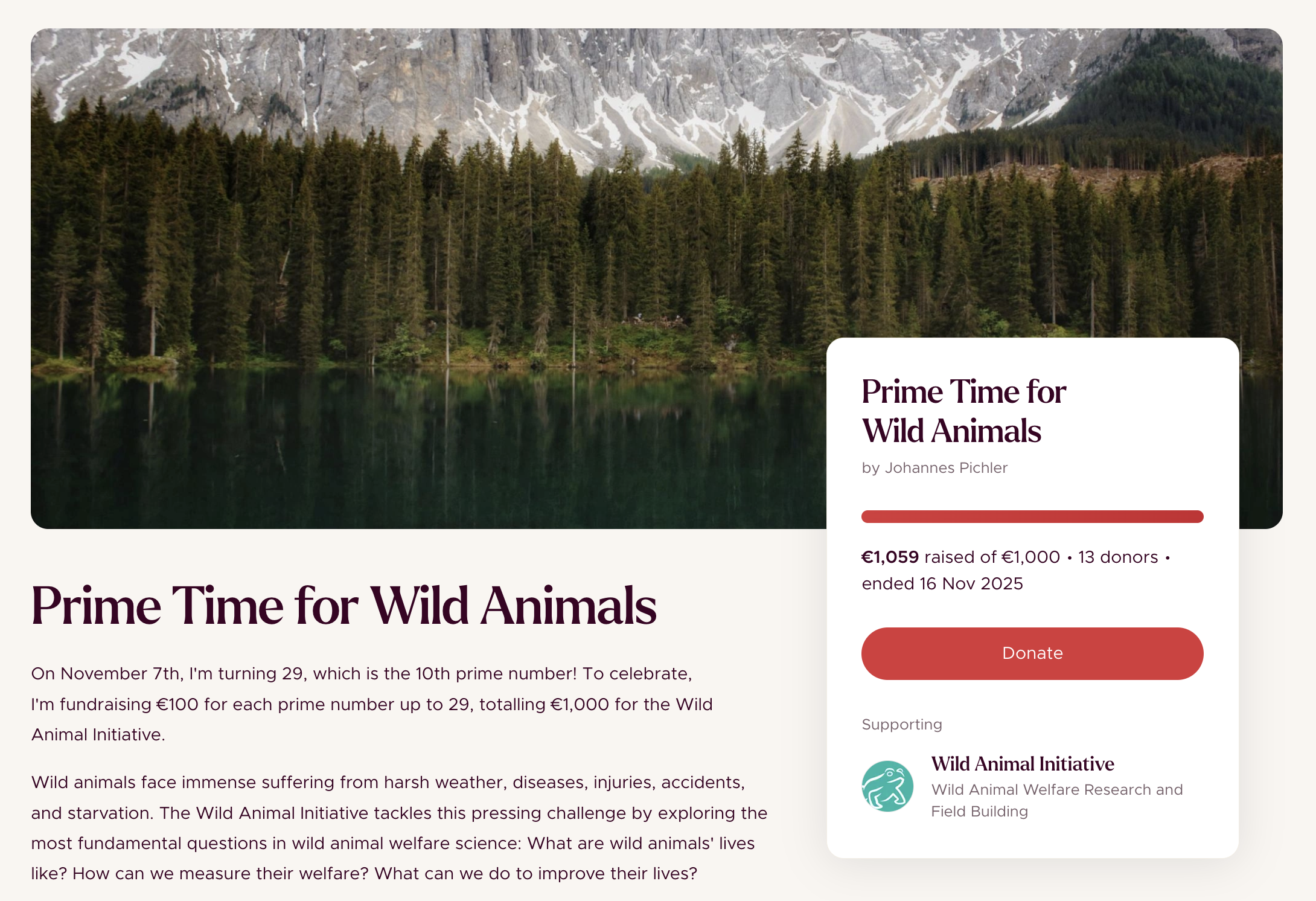
Johannes’ prime-number birthday fundraiser supporting Wild Animal Initiative
Megan: You also ran a birthday fundraiser for Wild Animal Initiative last year. What made you decide to do that, and what was it like?
Johannes: So actually, I had been inspired by Nazlı’s* birthday fundraiser the year before, she really normalized it for me!
Megan: She will be thrilled to hear that. (Editorial note: *Nazlı also works at Hive…this seems to be a theme in this interview).
Johannes: At first I thought, "I can't do this, my family thinks we should donate locally, in Austria, and here I am asking for donations for a wild animal welfare research organization in the US."
Megan: Lots of levels of inference to bridge!
Johannes: Yes, but I decided I really wanted to. I asked for €1,000. It was my 29th birthday, and I'm a bit of a nerd, so, 29 is the tenth prime number, and I thought we'd do €100 for every prime. I was surprised how many people gave. It works like a Giving What We Can campaign, with a fundraiser page.
We reached about €600, and I filled the last part myself. So, although I didn’t hit the goal, it’s also true that I'd never have asked for that amount in the first place.
I'll do a birthday fundraiser again, and I want to encourage others to try it. The EAA group in the Netherlands did a fundraiser marathon for The Humane League, the "chicken run," and raised a few thousand euros. It can be so impactful for animals.
Megan: Imagine if this became a thing at Hive, "who has a birthday this month, let’s run a fundraiser”
Johannes: Maybe if you did this, you could give it a cool name. I think it's great what you do at Hive with names like Pollinator and CoNectar. When you give a name to something and it becomes a thing, people know "ah, you're a Hive Partner, you're a CoNectar." I give €50 every month to Hive, and it's a way of saying thank you to the community, for what you're all doing for animals.
Megan: That is wonderful that you snuck in that plug for CoNectar. Speaking on behalf of our whole team, we are thrilled to have your support, in all the ways that you contribute to the Hive community Johannes.
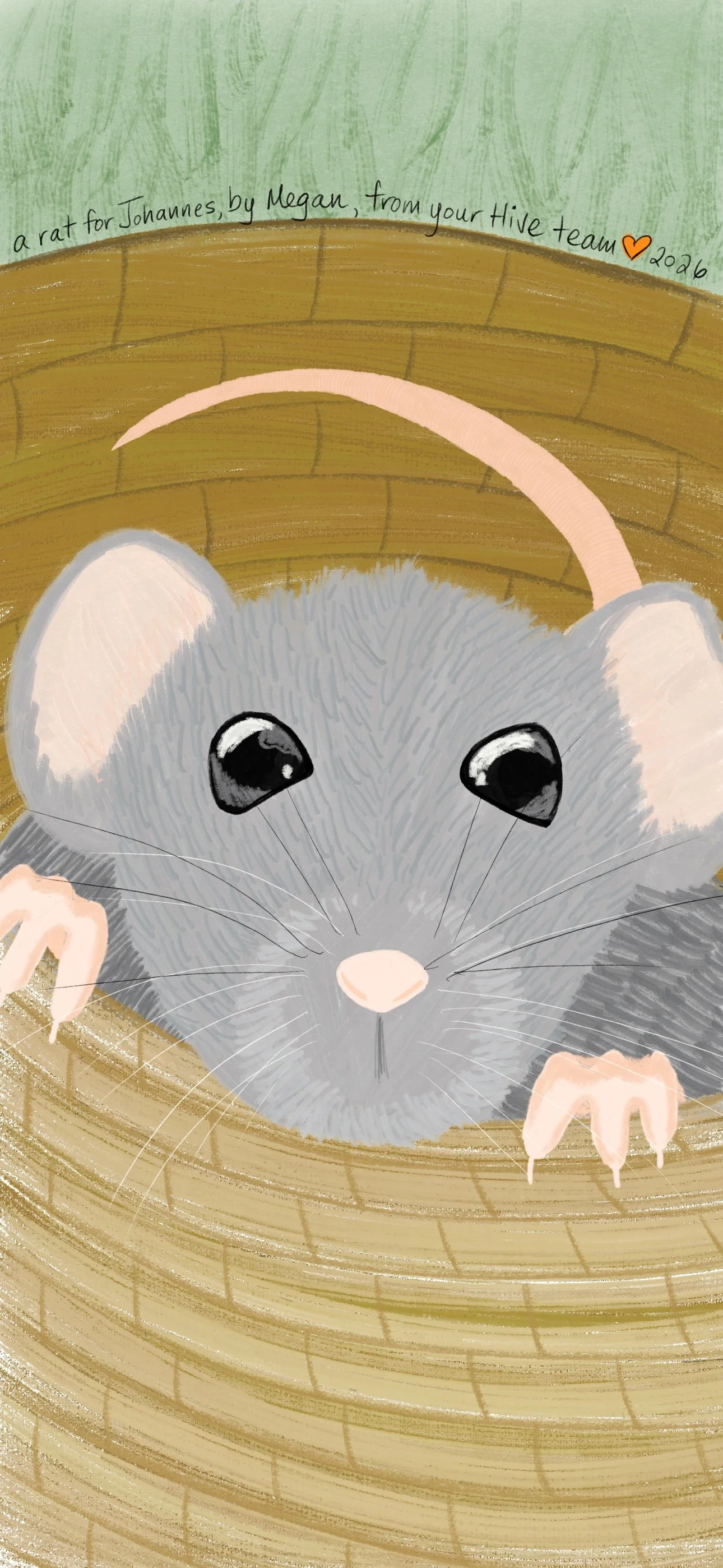
Johannes joined Hive’s monthly supporter community, CoNectar, during our campaign in early 2026. As a thank-you, we drew Johannes a digital phone wallpaper of an animal of his choice, this sweet rat.
Megan: One thing that’s core to Hive is the belief that everyone can make a meaningful contribution to farmed animal advocacy in a way that fits their circumstances. And as you know, our community members do that in so many ways. With their time, money, skills, actions. There’s endless ways to show up. At the same time, we’re usually using terms like “advocate” and “advocacy” to describe these people and what they do. With this context in mind, do you identify with the word “advocate” to describe yourself?
Johannes: Yes, I'd say so. I try to advocate for animals, live a vegan lifestyle, and show my non-vegan friends and family that it's a fulfilling way to live and that you can be healthy on a plant-based diet. And I want to use my career and my donations to help farmed and wild animals, and help other people do the same if they want to.
Megan: In closing, let’s do a few quickfire questions. Fruit or vegetables?
Johannes: Fruit.
Megan: Remote or in-person work?
Johannes: In-person.
Megan: Tofu or seitan?
Johannes: Tofu.
Megan: Coffee or tea?
Johannes: Tea.
Megan: An animal, a species or group, that you wish more people considered?
Johannes: Invertebrates.
Megan: Okay last question. I’m breaking with my own theme here, this is not really a quickfire at all. If you could have a conversation with one animal, what would it be, and what would you ask?
Johannes: Wow, yeah, that’s a really hard question. I try to witness and understand. I watch all kinds of insects in my room and wonder, what is this fruit fly up to? What's their day like? So I'd ask a fruit fly: what is it like to be you, here in my room?
Before this meeting I had a smoothie, and a fruit fly landed on the empty glass. There was still a bit of banana on the wall, and it would walk over, stop, eat a little, wander off, explore, come back. And I kept thinking: how do they find the food? Do they have memory? Do they know what they're doing? So yes, I'd talk to a fruit fly, and ask how their day is, and why they stopped at that particular point on the glass.
Megan: What a way to end. I think this really shows your care and curiosity, Johannes.
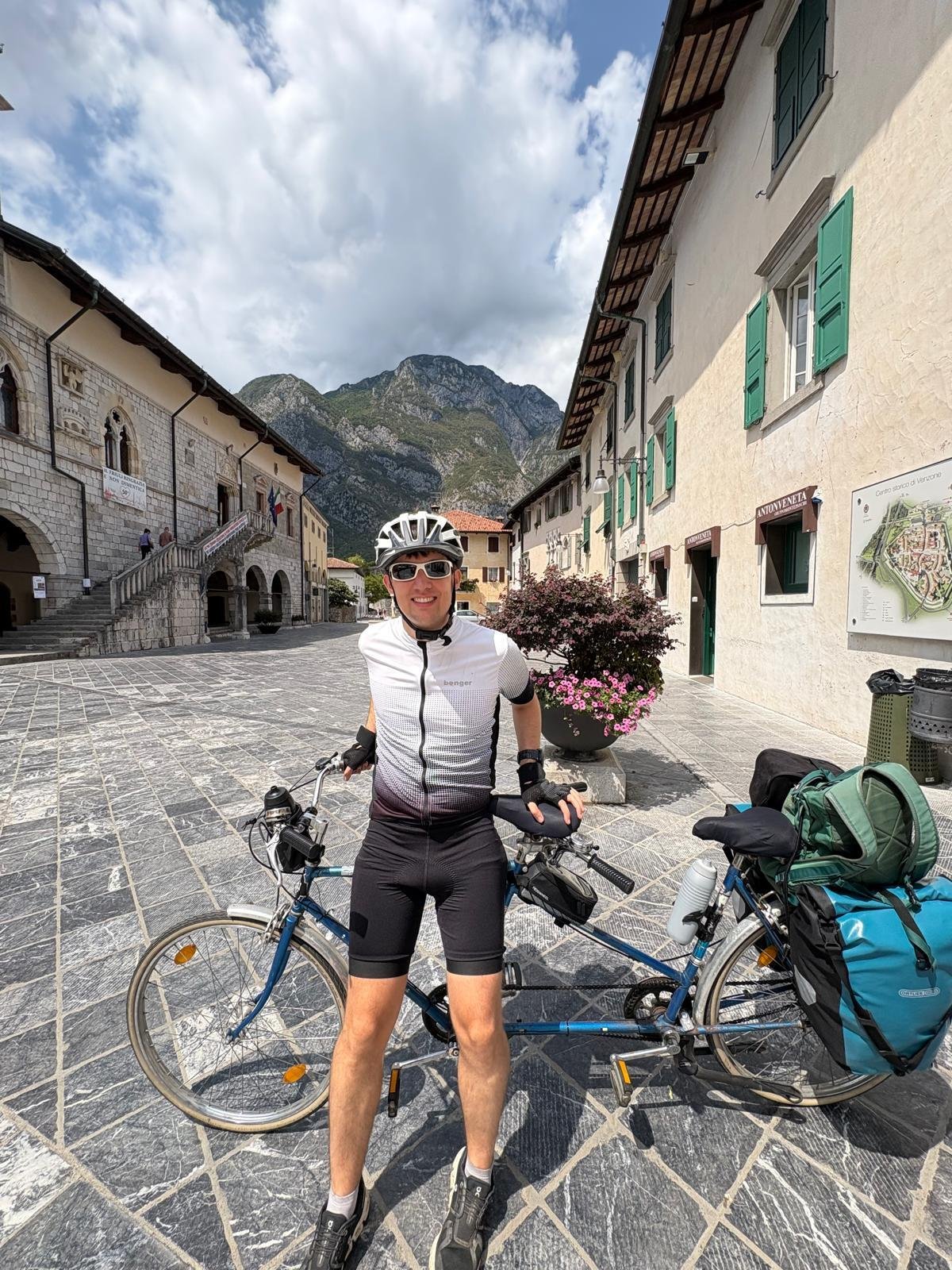
Johannes as one-half of a dynamic duo riding on a tandem bicycle in Italy recently
Thank you so much Johannes for building a better world for all animals, and for taking the time to share your story with me and the Hive community! 🧡
A few resources Johannes mentioned
Cowspiracy: Documentary
EA Switzerland: Website
Kevin Esvelt discussing the screwworm (and much else) on the 80,000 Hours Podcast: Episode
Screwworm Free Future: Website
Wild Animal Welfare Summit: Website
Hive Slack Community: Join us!
Support Hive as a CoNectar: Learn more!
