
Should You Start a Nonprofit, or Join One?
Editorial note: This article was originally published on the High Impact Professionals blog.
What it’s like to launch a nonprofit
A quick note before we start. This piece focuses on one part of the decision to start or join a nonprofit: what founding looks like day to day and who is a good personal fit for it. In addition to this, whether your idea is worth pursuing and what impact it could have also matter a lot, and I’ve written about those separately.
When deciding whether to start a nonprofit vs. join one, most people frame this as a question about ideas, skills or impact: is my idea good enough to build an organization around, or should I lend my skills to one that already exists? That framing misses what matters just as much. Founding is a different job from any role inside an established org, and the deciding factor is rarely the idea. It is whether the shape of a founder's life fits the shape of yours.
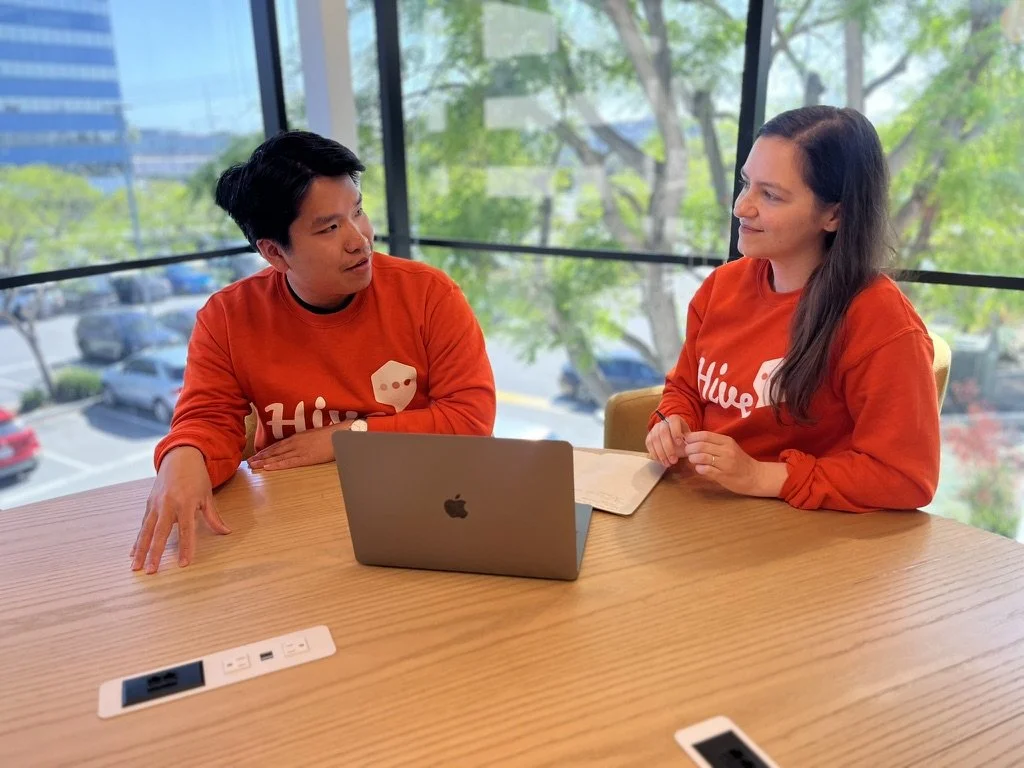
I co-founded Hive, an animal welfare nonprofit, four years ago and have run it since. I have mostly loved it, but I have also openly acknowledged the hard parts. I have also spoken to enough founders who mentioned their own ups and downs. Almost every hard thing about it is also the reason someone else would leap at it, and that is the point of this piece.
I also want to flag that every founder's experience will differ depending on the cause area, intervention, and co-founder they select, so please treat this piece as my own reflection rather than a prescription that applies to everyone. If you have also had experience founding and joining, I’d love to hear your thoughts in the comments.
You can choose your own hours (as long as it’s all of them)
The co-founder of Ambitious Impact, Joey Savoie, once put it this way when describing non-profit entrepreneurship: you can choose your own working hours, as long as it is all of them. There are no set working hours because there is no off switch. Everything stops with you. You worry constantly, and if the organisation fails, there is a fair chance it will be your fault. You also get bound up in the project in a way you rarely are with a job, and that attachment can tip into something unhealthy.
For other people, that same fact is the appeal. No more clocking in or being told off for being late. You have the freedom to design your own day. The thing is yours, and you have the freedom to design how it will make an impact. No one takes it from you until the funding runs out or the board asks you to leave, and until then, you decide what it is and where it goes.
The clearest way to see the nonprofit founding versus joining trade is to set the two roles side by side. As an employee, you have limited responsibility and little control. You need to work hard to be hired, can be let go, have someone else mostly shape your role, and often do not see what is happening at the top and can sleep relatively well. If the organisation is struggling, that is not yours to fix. You own your slice, and if you work in marketing, your job is marketing. As a founder, everything is yours: the agency, the knowledge of exactly what is going on, the freedom to reshape your role. But also the weight of being responsible for all of it, for fixing it, and for fundraising for your own and others’ roles. Neither is the better deal; they are different deals. The question is which of those you would rather live inside.
A nonprofit founder is the ultimate generalist
Founding is relentlessly generalist. You do everything, including the things you are bad at and dislike, because it is you or no one. If you have ample funding, you can hire skilled help, but finding good team members and managing them is still up to you. Unless you have an unusually good fiscal sponsor providing a full back office, you build it all from scratch: the policies, the benefits, the systems that established organisations already have in place.
Whether that is a burden or a draw depends on the person. If you want to go deep on one skill, it will wear you down. If you like touching everything and learning fast, founding is one of the few jobs that lets you do both. A blank page is heavy, and it also means you decide what the thing even is.
For example, one founder I know runs a research organisation. He often tells me how much he just wants to be a researcher and not have to think about the whole organisation. But now he’s funded the organisation, which is up and running. Finding another leader for it has proven challenging, so he is stuck in that role for now.
With founding, there is no manager and no map
Many people want to start their own organisation to be their own boss. While I can definitely confirm there are many benefits of not having a manager, there are also many downsides.
As a founder, you need to be highly agentic because no one is there to motivate you, unblock you, or sort out your problems. A co-founder helps, though sometimes your co-founder is as lost as you are. Advisors also help, though they cannot be there every day. I have an executive coach, which makes a real difference, and it is still not the same as a good manager. If you have ever had a good one, know that you may be giving up more than you realise.
Founding means a steep learning curve, a lot of mistakes, and getting comfortable with being wrong daily and carrying on regardless. It can be hard on the ego, and founders absorb a steady stream of rejection: funding turned down, roles that are hard to fill, the low hum of not knowing whether the intervention even works. It also means the fastest growth of your career and the freedom to act on a hunch without asking anyone. Some people find that corrosive. Others find it is the only way they want to work.
What founding costs: money, benefits, and recognition
Here, the trade is more one-sided, and it is worth being clear-eyed about. Founding roles usually pay less than senior roles at an established, well-funded organisation. Unless you are in a comparatively flush area like AI safety, or you get lucky, the money will not match what you could earn stepping into seniority elsewhere. For my first few years at Hive, I had no pension and no benefits. The older you get, the more that matters.
Early-stage jobs are also usually a lot less certain because the intervention isn’t proven yet, so it’s hard to predict whether you will receive the next year’s funding.
A big benefit of founding and leading is that you get a lot of credit. People know that usually the work is done by the whole team, but the leader is the most visible person. Even a senior hire in the team won't get as much credit for the work unless the CEO explicitly gives it.
There is also a quieter cost that serial early-stage founders raise most. You spend a stretch at low status while the organisation is small and unproven, and then, often just before it becomes successful, you hand it off. You hire a CEO, they do well, they are well paid and well liked, and your name fades from the story faster than you would expect. Unlike with for-profits, there is no "exit payout". The counterweight is non-financial: autonomy, meaning, and the fact that the thing exists because you made it. If you manage to build a good reputation among funders and peers, it will serve you well and help you secure other roles, but it’s not always straightforward to do.
The founder role changes as the organisation grows
The role of a founder does not hold still. The organisation you found in year one is a different one by year three, and different again by year five, and leading it changes with each version. The scrappy generalist who gets something off the ground is rarely what a larger, established team needs, so you have to keep growing into work you have never done. For some people, reinvention is the best part, since you never do the same job twice. For others, it is unmooring, because the work they were good at keeps disappearing underneath them. Many founders reach a point where the current version of the role is not what they signed up for.
Some want to hand off and build something new. Others are burnt out and want to be an employee for a while. Both are reasonable, and worth expecting rather than treating as failure.
For example, I know people who are brilliant founders because they are agentic and good generalists. But when their team naturally grows, they need to develop their management and leadership skills more. They are not always willing or able to do this, which may have a detrimental impact on the organization. It requires a lot of self-awareness to acknowledge that you are not a good fit for the next stage of your organization, hire your replacement and go on to found something else.
You cannot always walk away from founding as easily
With many jobs, you can give a few weeks’ notice whenever you want and move on to pastures new. But the founder's exit is harder than people expect. Leaving is straightforward if there is a strong co-founder ready to take over or a team member keen to step up. If you are the sole founder, you may find you cannot simply take another job and go. You might need something like twelve months to find and train a successor and hand off your relationships with donors and supporters, especially while the organisation is small. If you are not certain you are in this for the long haul, factor that in. There are founders who exist to get things off the ground and then move on, and that model works only with a co-founder happy to keep going.
Career capital of founding vs. joining
Founding a nonprofit builds serious career capital, but only if you come out of it with a good reputation. Start something that does not work for reasons inside of your control, or something where the credit sits with a co-founder rather than you, and the doors may stay shut. Build a solid track record, and the effect is large.
Since starting Hive and running it to where it is now, I have far more opportunities than I did before, and not only to found again. I have heard, and now found for myself, that former founders are sought after as senior hires: the range of what you have had to do transfers to almost any role. My skills are in demand for senior positions at established organisations, not just new ones. So I rate founding highly in terms of career capital. I would still not bank on it, because the payoff depends on how the work is judged, and that is only partly in your hands.
Joining builds serious career capital too, and it is often the more reliable of the two paths. Specialise, do work that is visible, and leave with a strong reference from someone whose name carries weight, and you come out excellent at your craft with a track record others can point to. The difference in founding vs. joining an organization is shape more than size. Founding an organization gives you breadth and a high-variance bet, large if your reputation lands and thin if it does not. Joining an organization gives you depth and a steadier return, especially if you resist spreading yourself thin and become one of the best people around at one thing. Which is the bigger prize depends entirely on what you want to do next.
So who is founding for?
Founding suits people who function well under high uncertainty, who like touching everything rather than going deep on one skill, and who are at a stage of life with some appetite for adventure and few commitments that are hard to delegate. Many people, reasonably, prefer guarantees, and that is a fine thing to know about yourself. Be honest with yourself about the stage of life you are in and the kind of person you are. Founding is a poor fit if you have heavy commitments outside work which are hard to delegate, or if you want a quieter, steadier existence: a nine to five, evenings that stay evenings, sleep that is not broken by worry.
The joining an organization path has a real positive case, and it is easy to lose when founding gets all the glamour. At its best, joining a well-run org gives you depth in a single skill, a manager who develops you, colleagues who share the load, and the ability to close your laptop at the end of the day and have it stay closed. A senior role at a well-funded organisation lets you do strategic, high-level work and hold real responsibility without carrying the whole thing, and it is often the higher-impact and more sustainable choice. You spend your time on the work you are best at, inside a structure someone else maintains. Founder and executive director roles at small organizations look glamorous from outside, but the reality is that you do everything, including the parts you will not enjoy.
I have been on the other side of this. Earlier in my career, as an employee, what I valued most was a narrower scope: I could focus on getting good at project management while others owned the things that scared me. Fundraising felt impossibly hard back then, and I was glad it sat with someone else, along with IT and everything that was not mine to carry. A good manager early on can help you grow faster than you would alone. The catch, for me, was control. I want to steer my own growth, and every job sets some ceiling on that, so when I hit those ceilings, I get frustrated. You also spend real energy adapting to a founder's or a CEO's vision and working style, which suits some people and chafes others.
It’s important to note that both paths have their own very real failure modes. All the jobs I had had both good and bad bits, and my founding experience has had its ups and downs. None is “safe” or “better”. The answer comes down to which of these lives you would choose on an ordinary Tuesday, and not only on the day you picture the mission succeeding.
Additional Resources:
Are you interested in founding a high impact organization? The recently launched Entrepreneurship Track in HIP’s Impact Accelerator Program is a great place to start.
If joining a great organization is for you, check out HIP’s Talent Directory to get discovered by high-impact organizations and transition into purpose-driven roles.
Our Hive Resources cover many topics relevant to founding your own organization, including fundraising for early-stage projects, mental wellbeing, and building organizations. Check out all Hive Resources.